Activists in Philadelphia Resist Roe v. Wade's Risk of Reversal
Local and national outroar persists weeks after the leakage of the Supreme court draft.
Becca Newman, May 2022
On Monday, May 2, an initial majority draft was circulated inside the court revealing a plan to overturn Roe v. Wade. The battle who never tires to control an individual's autonomy.
As news spread nationally, protesters prepared their speeches, signs, and chants.
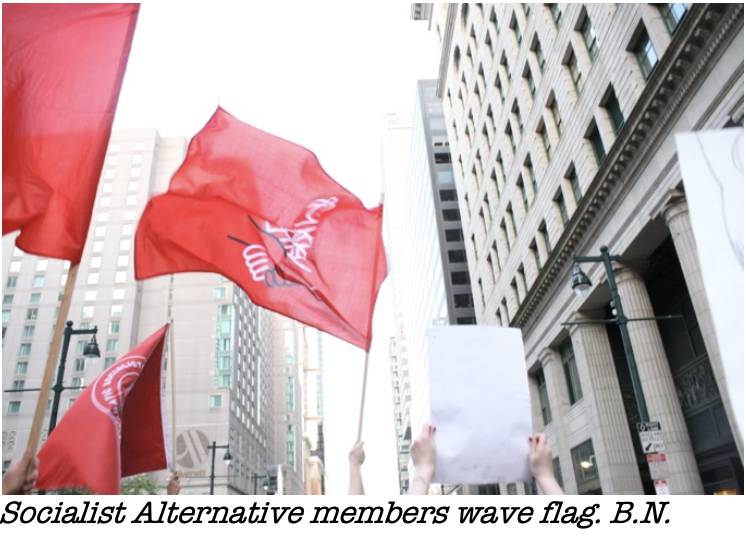
On the evening of Wednesday, May 4, Philadelphia Socialist Alternative, the Philadelphia branch of a national organization fighting exploitation, united the city to make noise.
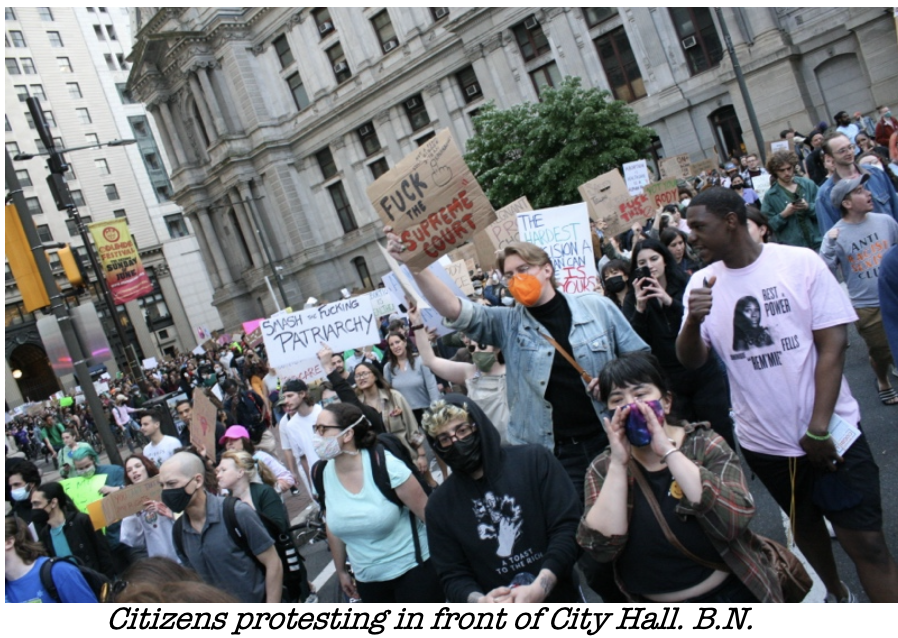
When clock struck six o'clock, almost two thousand citizens surrounded City Hall, participating in one of at least three hundred eighty nationwide demonstrations that day. The blue city in the purple state is the stronghold of the battle.
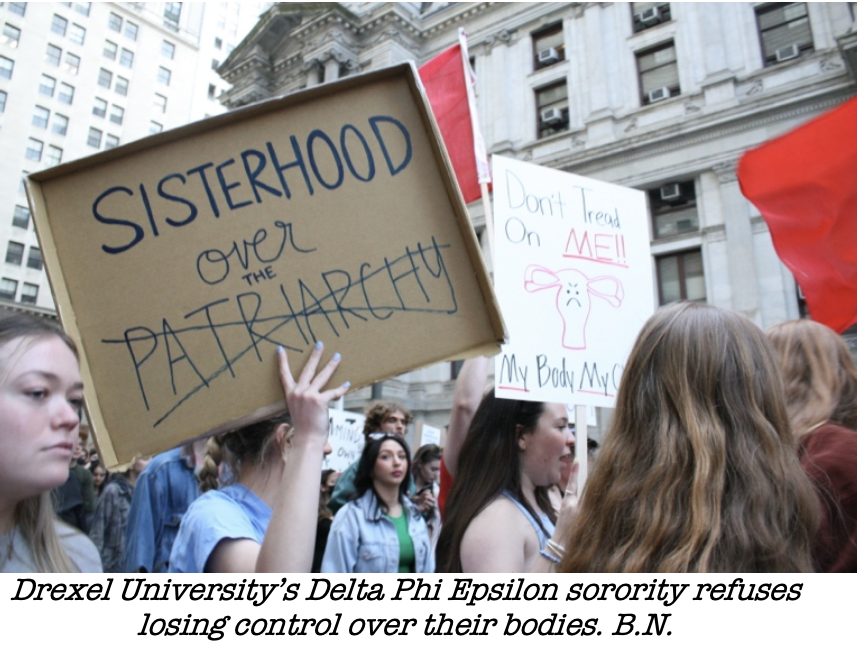
The optimistic rookies united with the exhausted veterans, welcoming every gender, race, and age. Speakers pointed to the broken capitalist system as the root of the problem, calling for free abortion on demand, Medicare for all including gender-affirming care, and a worker's party independent of the democrats.
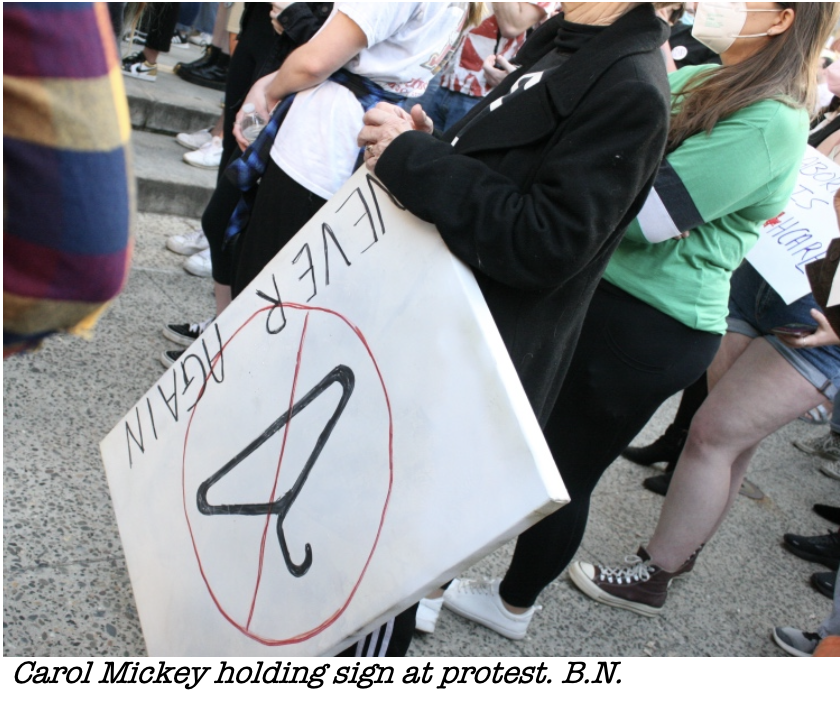
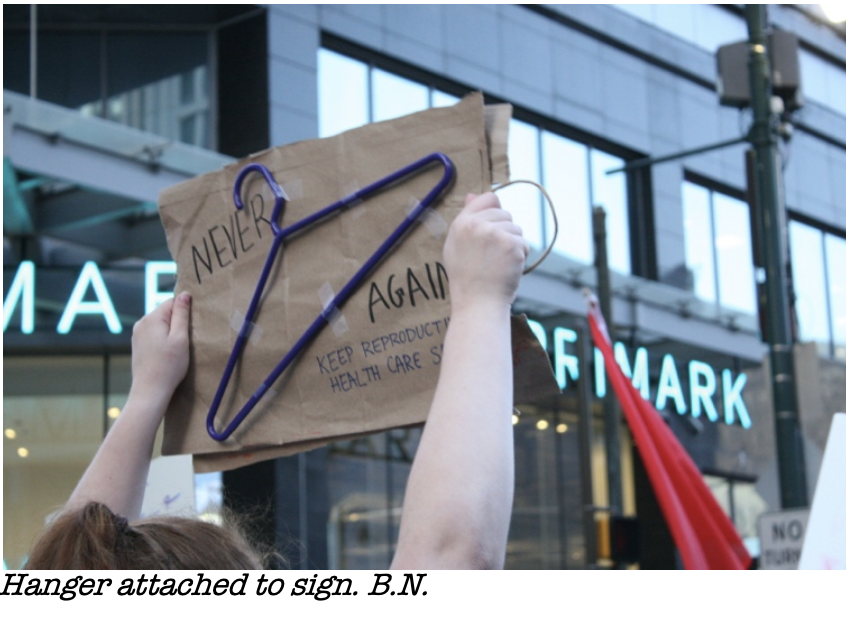
At the front of the stage surrounded by a sea of alternative youth, stood 80-year-old Carol Mickey, judge, and activist from the Greater Philadelphia Area Region. An enormous sign with the words "NEVER AGAIN" was gripped in her hand, written under a crossed-out hanger. With eyes full of anger and fatigue, it was evident she'd done this many times before. She was the matriarch of the demonstration.
Carol's life prior to Roe v. Wade brought anxieties every month, awaiting her period. Two days late was reason to prepare for the unsought outcome.
Not knowing anybody who would give an abortion, she and her associates would treat each other: "My mom would help me, I'd help my friend. That's how we grew up as teenagers"
Fear cultivated for her lack of rights, but anger emerged in 1968 after a near-death experience.
When she was married and pregnant with her second child, her water bag broke from a fatal fall. The law prohibited further action: "They couldn't help me. They just had to wait and see."
Because she could not attain the remedy needed, her infection spread, and she grew clinically ill. It wasn't until she lay on her death bed that a judge intervened, allowing doctors to terminate the fetus.
Her husband was then required to give permission; the decision was still not hers.
Prior to this conversation with Carol, speakers stood in front, noting overturning Roe v. Wade will not only illegalize abortions, but will embolden the government to take more.
Since Roe v. Wade falls under the fourteenth amendment, which protects the right to privacy, a court decided banning abortions is a violation. If overturned, a path will be paved for the court to do this with other rights from contraceptive rights to same sex marriage.
Emerging in the spotlight of City Hall stood Marty Harrison, nurse at Temple University Hospital and member of Socialist Alternative.
"I'm fired up because I've been here before. We've done this before. What do we have to do so we don't have to do this again?"
Harrison's refusal to recognize the democrat party's efforts stems from their lack of legislation to make abortions legal on the federal level within the last forty-nine years. Since 1973, democrats have controlled houses of office and the senate multiple times, but their credibility dwindles with much talk and little action.
Abortion rights has been a hotpot for news for years, yet most people didn't act until realizing the proximity of Roe being repealed.
It will be difficult to fight for abortion access. Because of the slim Senate majority, any actions the administration would take would be challenged and Biden does not have the power to override a Supreme Court ruling or rewrite state laws seeking the ban.
Yet activists remain disappointed with the lack of creative approaches and criticizing only republican state governments isn't enough. They see politicians encouraging voting for representatives in favor of Roe v. Wade as the bare minimum.
The question lies in what those in power can do. Temple University student, Rachel Wilder, explains how President Joe Biden, former President Barack Obama, and democratic figures publicize their pro-choice views yet, are too afraid to touch the controversial issue.
Biden can stand taller if he looks outside the box. He can challenge state laws to increase access to medication abortion, allow clinics to establish themselves on federal lands, and enforce Medicaid coverage in states implementing bans.
Wilder believes transformation is possible because it has been done before: she firmly states "The major establishment has been on the wrong side of history every single time."
Not only are democratic citizens losing trust in their officials, but they note liberal feminism will not destroy the patriarchy because the incomplete framework excludes class struggle. There is no explanation on why the patriarchy persists. Activists urge for socialist feminism view capitalism as a source of gender oppression, focusing on uniting the entire working class
It is for the impoverished women who do not have money or time to travel hundreds of miles to keep themselves alive. It is to protect those who cannot afford an abortion, let alone support a child.
Wilder urges the public to gather everyone they know into the streets to build the Socialist movement, "I'm sick and tired being told I must follow the correct democratic party." Without flinching, Wilder explains the Democratic party continues selling its allies out: from queer people, people of color, and working people.
"Politicians have had time to get their acts together and now is not the time to be begging for that." For change to occur, activists understand they must be the ones to act and work together.
Organization and relentlessness is essential to succeed. Wilder hollers out; "We must demand the entire damn cake!"
Then began the march. Natural leaders made their way to the front, faces mixed with anguish and anger.
"Not the church, not the state, Women must decide their fate"
Chants were learned; hangers were held. Commuters glanced over; inhabitants cheered. Individual voices metamorphosed into groups. The homeland of the U.S. constitution was calling for the prevalence of democracy.
The Socialist Alternative are continuing their protest efforts by helping organize walkouts at schools and workplaces.
The process for change is longstanding yet essential. Carol Mickey's advice is simple; referring to the demonstration, she stated: "this is what we can do"
She had undergone the toil of previous nationwide issues; "From growing up with the civil rights and the Vietnam war, we were on the streets every day."
Carol's number one rule she got out of her experience is to make noise. "I think unless you become really disruptive, nobody pays attention."
The movement for accessible abortions in the 1970's was successful because of the masses. With the current window open, activists are prepared to build a large force and reverse the proposal from the supreme court.